
Switch to:
 EN
EN  Português (PT)
  Español (ES)
We take a look at fixed vs. variable costs, the viability of chartering, and why Fractional Ownership is emerging as a strategic solution for executive aviation in Brazil.
Over the past decade, Brazil has solidified its position as one of the most relevant markets in the global business aviation landscape. The growth of the aircraft fleet, improvements in airport infrastructure, and tax incentives for the acquisition of new and pre-owned aircraft have all played a decisive role in allowing the country’s business aviation sector to truly take off. According to a report published in 2024 by Mordor Intelligence, the Latin American business jet market is expected to reach an historic value of USD 1.31 billion by the end of the decade, with Brazil accounting for a significant share of this expansion. Reflecting this momentum, the Brazilian Aeronautical Registry (RAB) now records more than 1,000 privately operated aircraft active in the country.
Charter operators play a crucial role in this expanding landscape. According to the Brazilian General Aviation Association (ABAG), the fleet dedicated to charter operations has now reached 686 aircraft. For business aviation users, this means more available flights and faster access to major hubs. It also reflects a steady growth trend for the coming years.
Imagine taking off from São Paulo at 8 AM, touching down in Brasília at 9:30 for a crucial meeting, and making it back in time for lunch with your family. That is the power of time optimization that executive aviation delivers. More than just a luxury item, private jets are powerful business tools designed to maximize productivity.

Beyond Flying: The Strategy Behind Private Jet Acquisition
Operating a business jet is like running a company, although on a smaller scale. Every decision and every cost, whether fixed or variable, has a direct impact on the investment’s ROI and, above all, on operational safety.
The most requested aircraft in recent years, the Hawker 400XP, commands an acquisition price between $2 million and $2.5 million. As a favorite in the Brazilian market, its robust airframe offers attractive operating costs, an impeccable safety record, and operational versatility, making it suitable for the vast majority of domestic airfields. In comparison, the Phenom 300, Embraer’s record-holder, can cost between $8 million and $14.5 million brand new, or around $6 million in the pre-owned market.
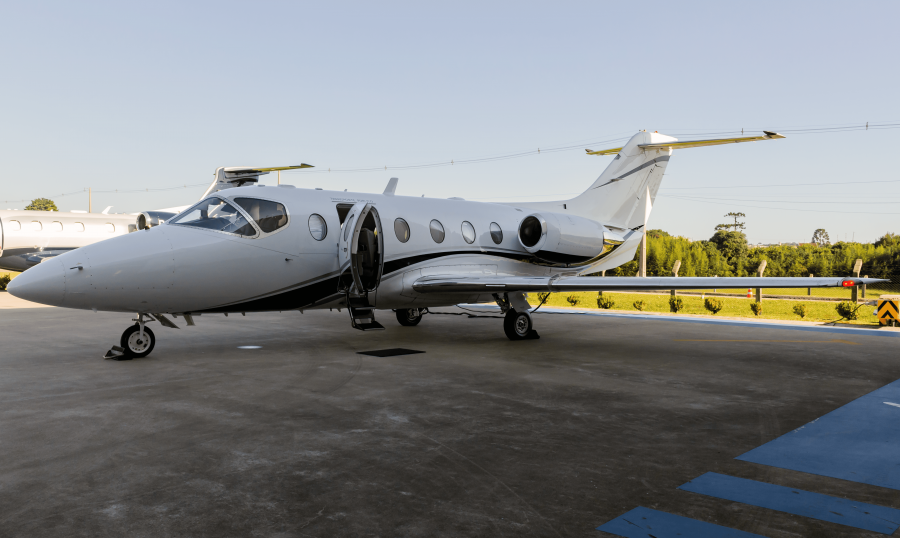
Hawker 400 
Phenom 300
It is important to highlight that base values can fluctuate significantly between aircraft of the same model. This variance is often driven by retrofits performed by previous owners, such as the installation of high-speed satellite Wi-Fi or upgraded IFE (In-Flight Entertainment) systems. Other critical factors include the airframe cycles (number of landings and takeoffs since new) and the presence of advanced avionics. These systems are essential for operations into challenging airfields with complex approaches, such as Santos Dumont (SDU), known for its low-visibility conditions.
The high costs involved in this purchase make choosing the aircraft and negotiating the deal a careful process that requires specialized attention. Flapper, with its market expertise, acts as a strategic partner to guide this decision, offering specialized consulting.
Whether you are exploring the used market with legal and operational safety, or buying shares through Fractional Ownership, having experienced support is fundamental. The new owner or future shareholder needs guidance from choosing the aircraft that best fits their flight profile all the way to closing the deal.
Private Jet Operating Costs: Fixed vs. Variable
Business jet operating costs are primarily divided into fixed and variable expenses. These costs require careful analysis prior to acquisition; it is crucial to keep in mind that operational expenses continue to accrue even when the aircraft is grounded.
To illustrate how these costs behave, we will use the Cessna Citation CJ2 as a baseline, a high-performance light jet chosen for its versatility and operating economics. This aircraft boasts impressive short-field performance and is capable of navigating high-density airports. This allows for significant mission flexibility, making it a staple model in the Brazilian business aviation fleet.
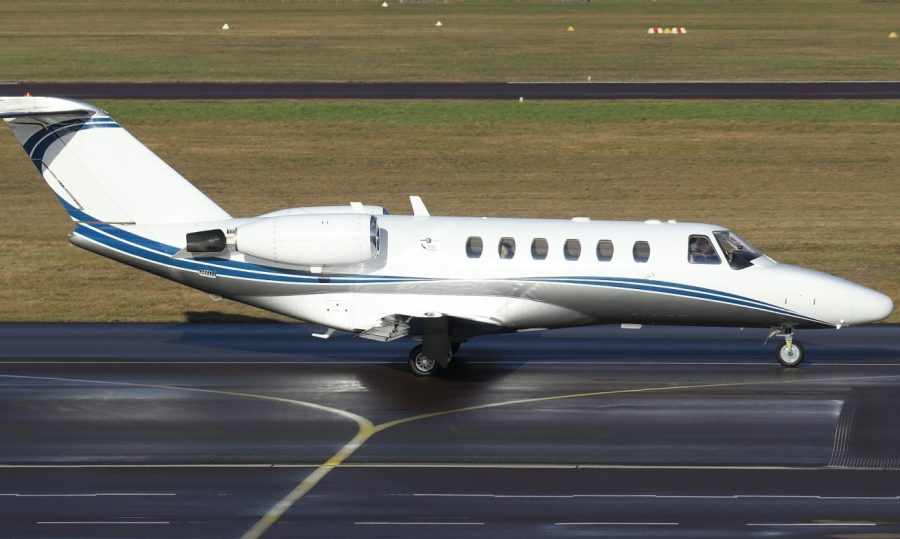
Cessna Citation CJ2
When it comes to fixed operating costs, flight crew staffing is one of the most significant line items. In business aviation, defined by on-demand missions and diverse itineraries, the compensation for Captains and First Officers reflects the rigorous demands for availability, personalized service, and, above all, the non-negotiable safety of every operation.
Although it varies depending on the region of Brazil where the aircraft is home-based and the pilot’s experience level, the base salary for a Captain (PIC) on a Cessna Citation CJ2 averages R$ 26,000. For First Officers (SIC), following the same metric, the average is R$ 14,000. It is important to note that this salary structure excludes costs with benefits or agreements provided by each operator, such as health and dental plans, per diems, and training subsidies, among others.
Prioritizing maximum flight safety, and in full compliance with RBAC 135 (Brazilian Civil Aviation Regulation) issued by ANAC, Flapper, alongside Black Táxi Aéreo, always operates its aircraft with a multi-pilot crew, specifically, a Captain and a First Officer.
Hangarage fees are another major component of fixed operating costs. These rates fluctuate significantly based on the aircraft’s home base. In smaller interior cities, a proper facility usually costs around R$ 5,000 per month. However, at major hubs like Congonhas (CGH) or Galeão (GIG), this cost can soar to R$ 60,000. At general aviation airports like Pampulha (PLU), Campo de Marte (SBMT), and Bacacheri (BFH), the average hovers around R$ 20,000 per month.
In addition to crew and hangarage, fixed operating costs also encompass insurance, license renewals, recurrent training for the crew, technical subscriptions (such as navigation databases and maintenance tracking), and regulatory fees. When summed up, these figures can represent a monthly investment between R$ 100,000 and R$ 200,000 for aircraft such as the Cessna Citation CJ2, Hawker 400XP, and Embraer Phenom 300, varying according to the operation model and usage demand.
| Type of Cost | Average Monthly Cost |
| Flight Crew (two pilots) | R$40.000 |
| Hangarage | R$20.000* |
| Aircraft Insurance | R$35.000 |
| Fuel (120 hr/year) | R$39.660 |
| Maintenance (120 h/year) | R$84.380 |
| Management / Other Costs | R$12.000 |
| Estimated Total | R$200.000 |
Managing this complex structure of fixed and variable costs requires time and technical know-how. To address this specific need, Flapper offers a specialized Aircraft Management service. Through this, the owner relies on a team that operates with absolute transparency and utilizes technology to optimize the investment. This unique combination of efficiency and expertise provides total freedom, allowing the owner to focus on their core business while leaving the entire operational complexity to Flapper.
Tax Incentives and Advantages of Operating Your Jet in Charter Service
Incorporating an aircraft into a Brazilian charter operator provides immediate tax advantages, including a 10% to 15% reduction in import duties. These incentives, in effect since January 2023 under Provisional Measure No. 1,147 of December 20, 2022, and valid until January 2027, have delivered significant benefits to the development of business aviation in Brazil.
Beyond tax incentives, making the aircraft available for charter allows the owner to offset or even eliminate the fixed costs of a jet that would otherwise serve a single owner exclusively. Under the regulation of RBAC 135 by ANAC, aircraft in air taxi operations adhere to the highest safety standards. This includes stringent maintenance, periodic ANAC inspections, and professionalized management of crew, maintenance, fueling, cleaning, and cost control.
Operators aiming for excellence don’t just follow the rules set by aviation regulators; they go beyond them, seeking international certifications. Flapper is the only company in the Southern Hemisphere to hold the prestigious ARGUS Certified Broker seal, in addition to being an active member of the Air Charter Association, NBAA, and ABAG. This proves a non-negotiable commitment to operational safety, protecting both the owner’s asset and the charter client’s experience.
Chartering your Jet vs. Keeping it for Exclusive Use
Consider a scenario where an owner flies 10 hours a month privately and dedicates the aircraft to charter operations for 240 hours annually. In this setup, it is fully possible to significantly offset fixed costs, practically eliminating the monthly operating expenses. If we increase this availability to 360 charter hours per year, or secure block-hour contracts at rates up to R$ 45 per kilometer, it is feasible to reach cost neutrality, meaning the charter revenue covers all annual expenses and opens a margin for profit on the asset.
By comparison, the monthly carrying cost to maintain a jet hovers around R$ 200,000 for strictly private operations. However, by chartering it out, this cost can drop to R$ 100,000 per month with high fleet utilization.
Whether the goal is to optimize costs, achieve geographic freedom faster, or access all the benefits of executive aviation with maximum financial predictability, the market is already pointing toward an ownership model that combines the perks of professional management with the security of owning a fraction of your own jet: Fractional Ownership.
Fractional Ownership: a smarter way to fly
Fractional Ownership is not just an alternative acquisition model; it is also an investment strategy that combines versatility and efficiency. The share model is becoming the ideal solution for those seeking greater financial predictability and aircraft ownership, but with a significantly more flexible capital requirement.
This acquisition model works in a straightforward way. Instead of bearing the full purchase price and the substantial monthly fixed costs alone, such as crew salaries, hangarage, and insurance, as is the case with sole ownership, the client acquires only a share of the aircraft. Operational expenses are shared, and aircraft utilization is maximized among co-owners, allowing each shareholder to enjoy the benefits of a private jet as if it were their own, aligned with their allocated flight hours and at a significantly lower investment.
Limited to just five shareowners per aircraft, this model makes fixed costs highly predictable, bringing the monthly fee down to around R$ 30,000. As for the variable costs (fuel and fees), they are simplified into a single rate per flight hour. This keeps the shareowner in total control of spending, costing approximately R$ 12,500 per flight hour, based on a 10-hour monthly allocation, for example.
Through Flapper’s Fractional Ownership program, you can acquire a share of the renowned Hawker 400 for $550,000. With this acquisition, you enjoy all the benefits of owning a executive jet, with a total monthly investment of under R$ 200,000.
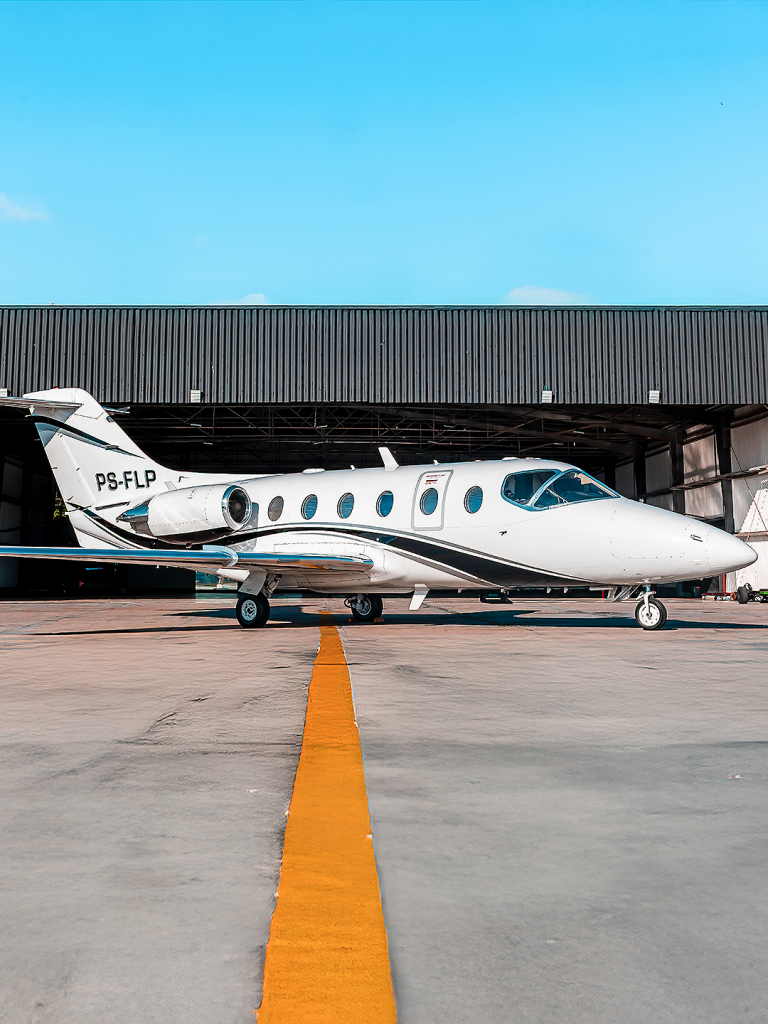

Flapper handles the operational complexity, delivering a unique management model to shareowners. This ensures maximum simplicity for the owners, backed by the strictest global safety certifications.
This professional management guarantees not only flight and operational safety, but also complete transparency in cost optimization. We turn jet ownership into a smart investment with the convenience that only executive aviation can provide.
Fractional Ownership goes beyond merely flying with privacy, comfort, and efficiency; it is about elevating the entire experience and taking asset management to the next level.
Flapper: air mobility the way you always imagined
Since its founding in 2016, Flapper has established itself as Latin America’s leading on-demand private aviation platform, combining cutting-edge technology with rigorous safety standards. We offer not just flights, but intelligent air mobility solutions that redefine the concept of flying