Flapper is proud to be accredited by the aviation industry’s leading associations and by some of the most exclusive business organizations across Europe, the United States, the Middle East, and Latin America.
Accreditations and Associations




How does it work?

Contact us by phone or form. Our team initiates the service protocol and case analysis right away.

Our specialists define the ideal aircraft and conduct the clinical assessment ("Fit-to-Fly") to ensure the safety of the transport.

Mission confirmed. We coordinate ground ambulances (bed to bed), hospital procedures, and the Air ICU flight.
Our Specialties in Aeromedical Transport
Discover the scope of our services designed with specific teams and equipment to ensure ideal care in different critical scenarios.
 Guaranteed safety
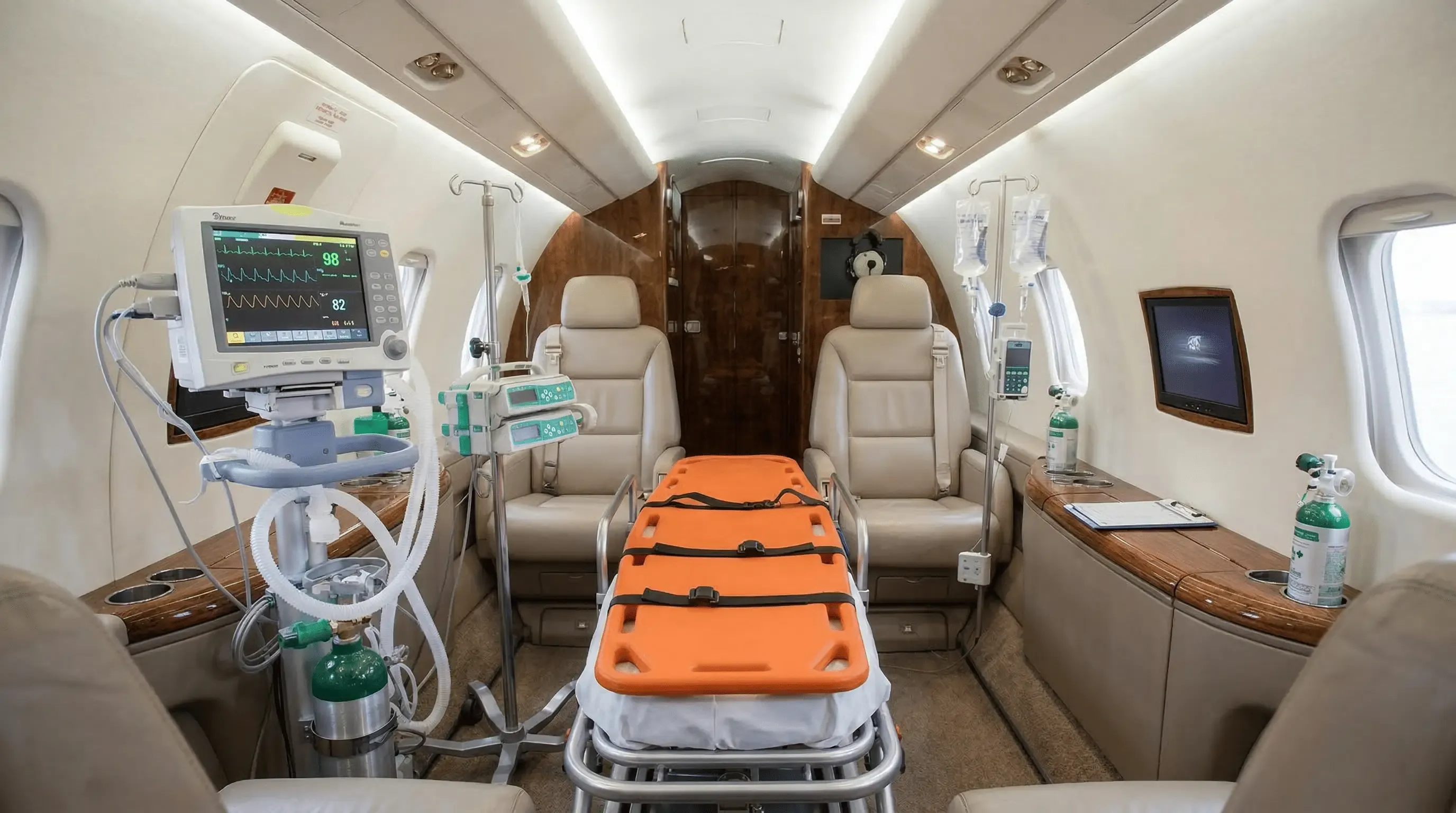
Air Ambulance (ICU)
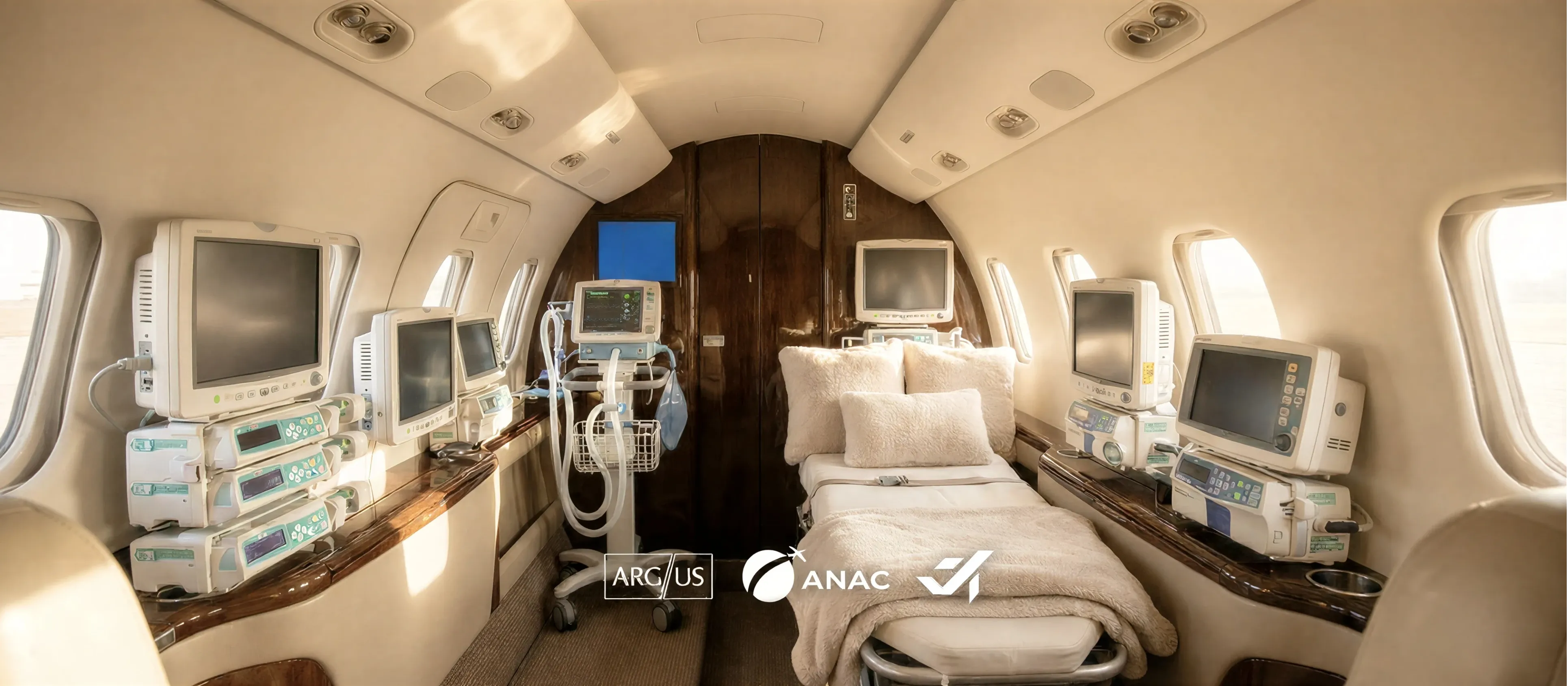
Aeromedical transport in jets and turboprops equipped with a complete ICU and a specialized medical team for critical care throughout the flight.

 From the world, to your home
International Repatriation
Global logistics for the safe return of patients to their home country, with bilingual support and complete coordination between international hospitals.
 Innovation for small lives
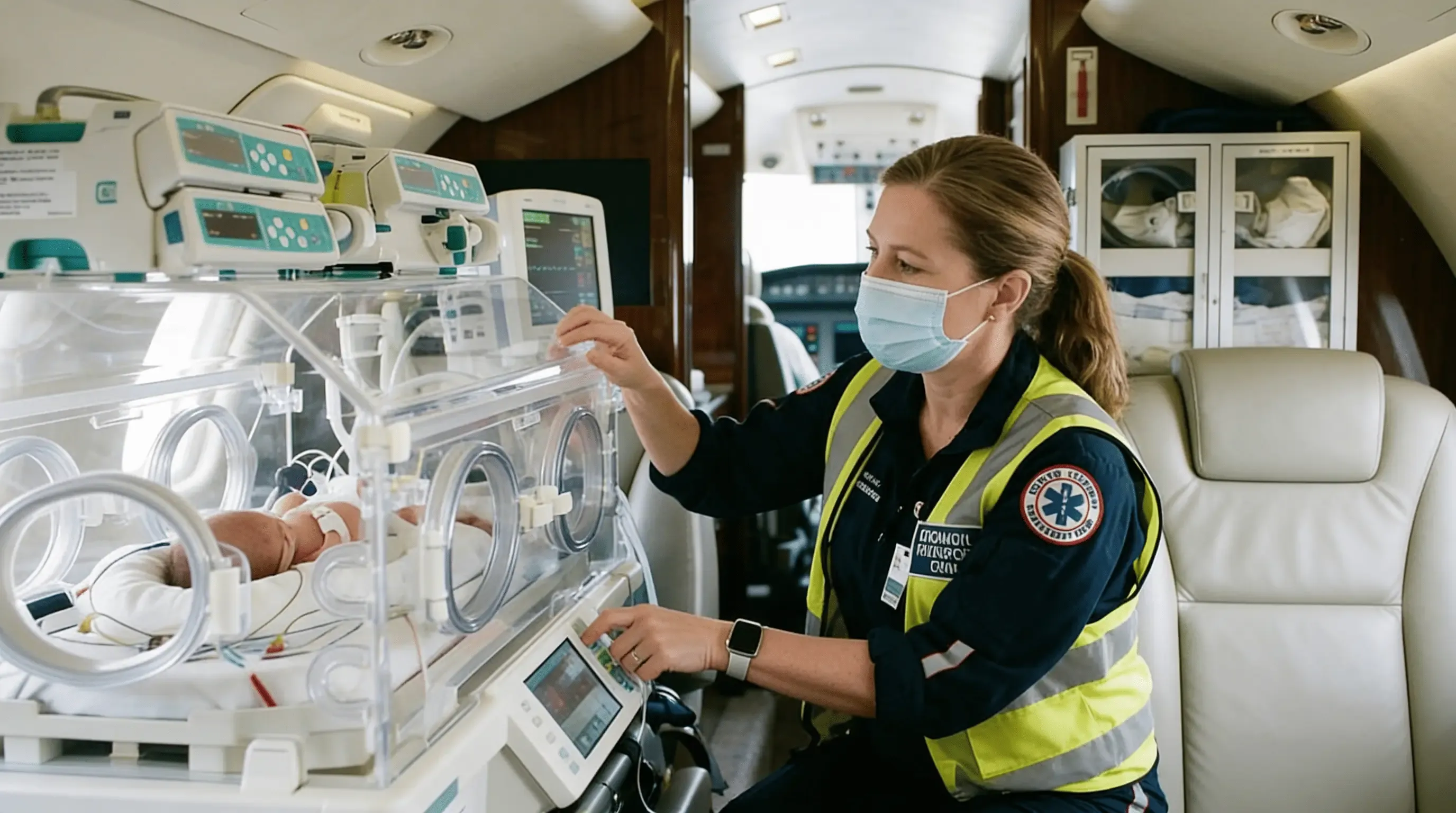
Neonatal and Pediatric
Specialized care for newborns and children, using state-of-the-art incubators and professionals focused on pediatric intensive medicine.
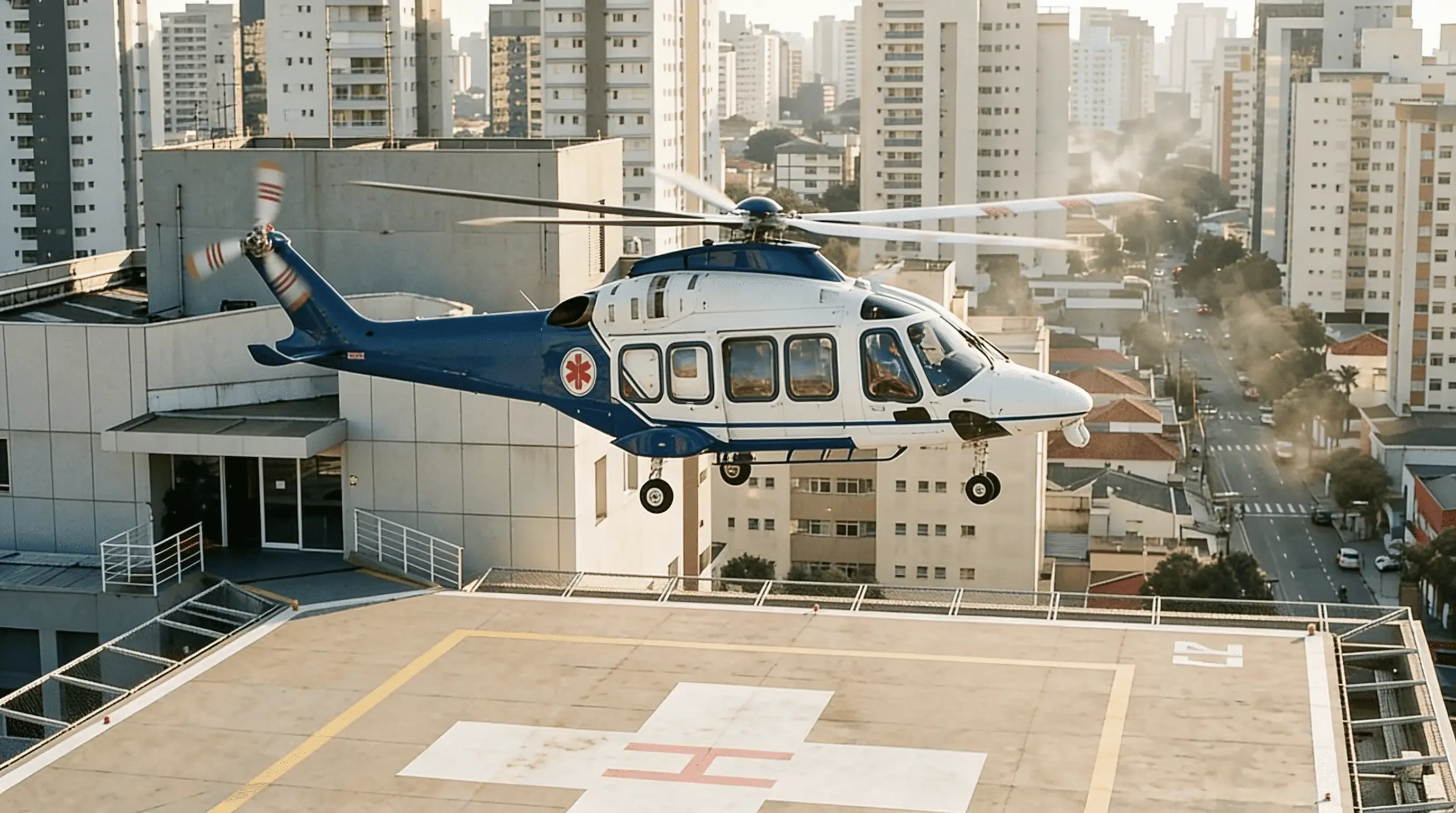
 Every minute counts
Inter-hospital Transfer
Swift transfers between hospital units via helicopters or airplanes, ensuring continuity of treatment with maximum speed and safety.
Available Aircraft Configurations
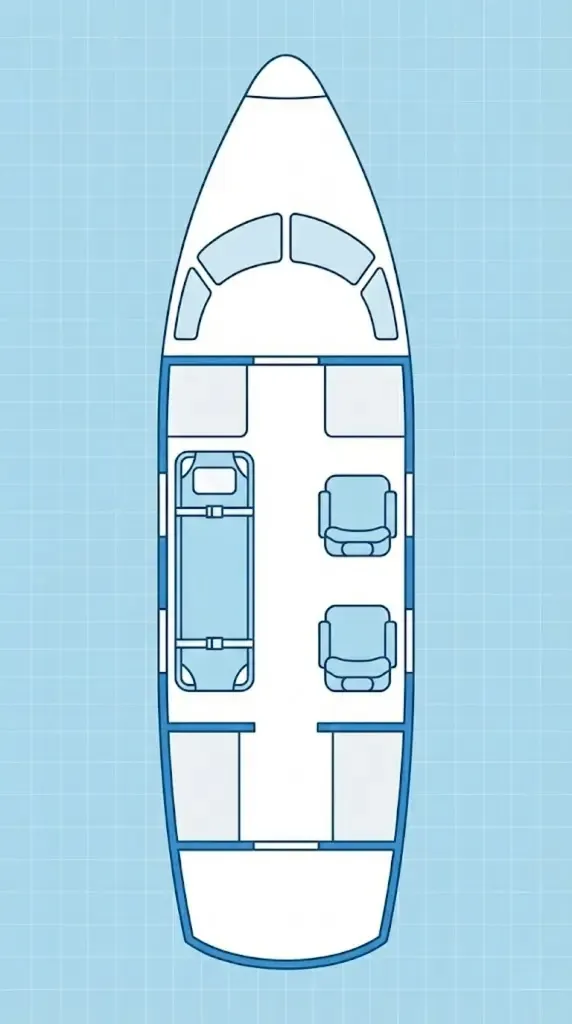
Essential ICU
Basic configuration with stretcher (1) and medical team (1).
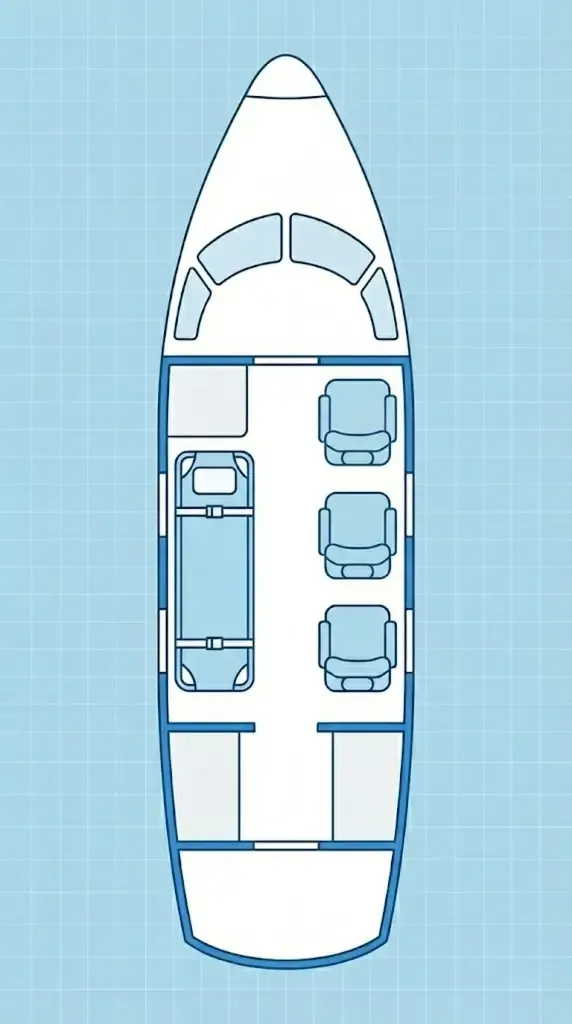
Standard ICU (Single Bed)
Common configuration with stretcher (1), medical team (2) and companion (1).
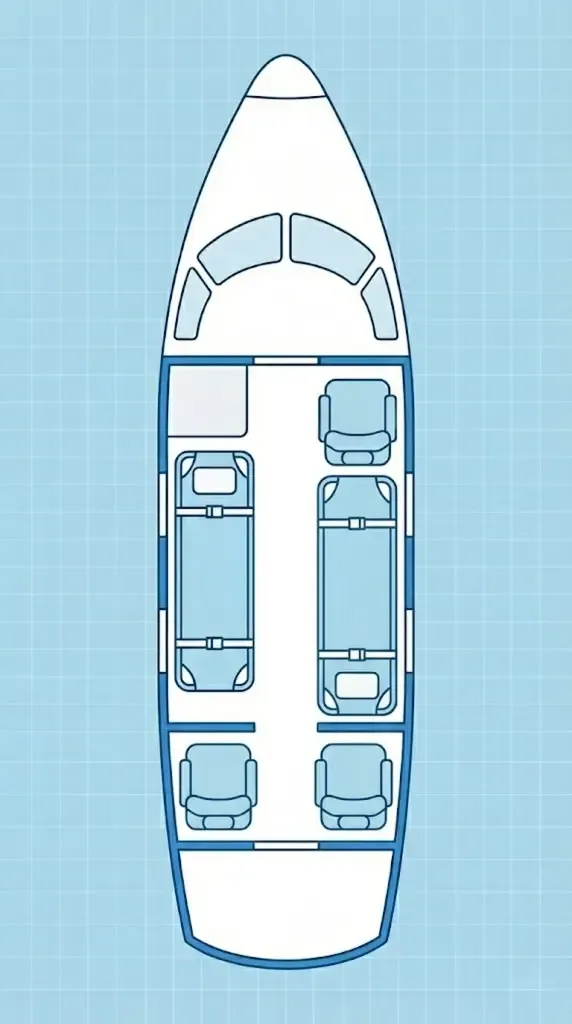
Double Bed ICU
Special configuration with stretchers (2), medical team (2) and companion (1).
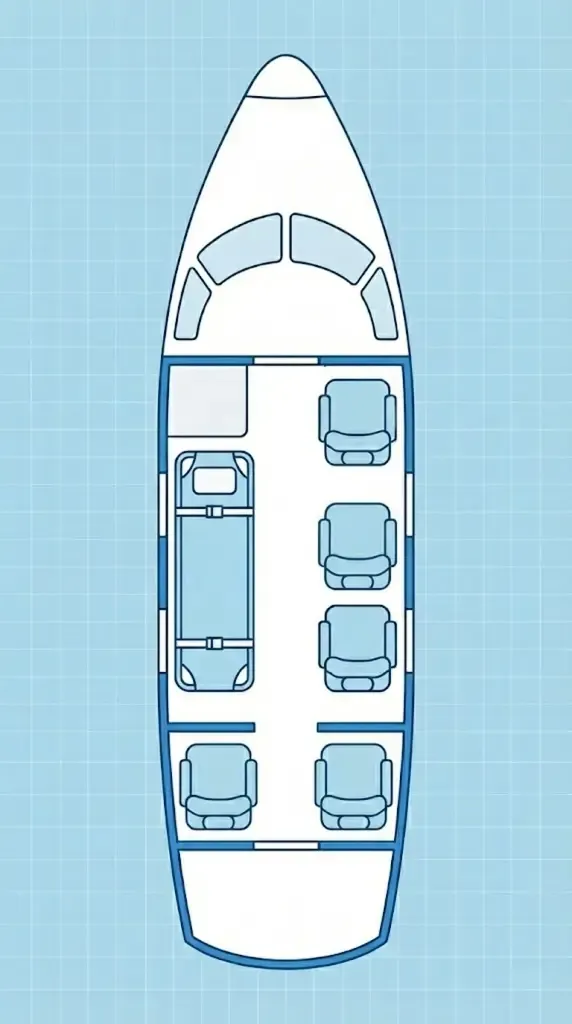
Comfort ICU
Configuration for long distances with stretcher (1), medical team (2) and companions (2 to 4).
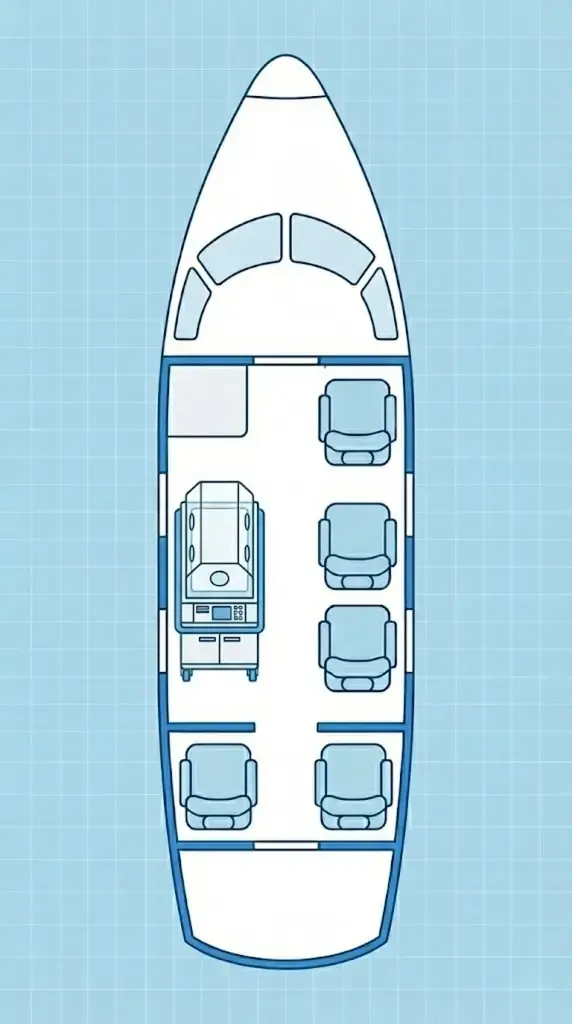
Neonatal ICU
Configuration for neonates and pediatrics with incubator (1), medical team (3) and companions (2).
Our emergency team is on duty 24 hours a day, 7 days a week, ready to coordinate the complete logistics of the transfer in record time. Don't waste time.
The numbers say it all
18K+
flight hours
500K+
users
100%
safety record
We're here for your needs
Questions?
For complex itineraries, group charters, or specific mission requirements, our team of aviation experts is available 24/7 to provide a personalized proposal.

FAQ - Aeromedical Flight Services
How quickly can the aircraft take off after hiring?
In urgent cases, we can arrange for takeoff within 2 to 4 hours after confirmation of the flight and medical clearance. Our operations team works efficiently to ensure the fastest possible response.
What is the 'Bed-to-Bed' service?
It is our comprehensive care protocol. Flapper manages not only the flight but also the ground ambulances at both the origin (from the hospital to the airport) and the destination (from the airport to the receiving hospital), ensuring that the patient is always under continuous medical care.
What documents are required to hire the flight?
The main document required is the patient's updated medical report. With this, our medical team evaluates the transport condition ('Fit-to-Fly'). Additionally, identification documents of the patient and companions are required for boarding.
Who makes up the medical team on board?
The standard medical crew consists of one doctor and one nurse, both specialized in aerospace medicine and intensive care. For specific cases (such as neonatal or psychiatric), we call in dedicated specialists (pediatricians, neonatologists, etc.).
Does the aircraft function like an ICU?
Yes. Our aircraft are equipped with the 'Life Kit', which includes mechanical ventilators, multiparametric monitors, defibrillators, infusion pumps, and supplemental oxygen, replicating the structure of a complete hospital ICU.
Who decides if the patient can travel?
The final decision is made by the Medical Director together with the doctor from the originating hospital. We perform a rigorous screening to ensure that the patient is stable enough to withstand changes in altitude and pressurization.
Can I take companions on the flight?
Yes. In most configurations (Standard ICU), 1 or 2 family companions are allowed, in addition to the medical team. In larger jets or long-range configurations, more family members can be accommodated. Please consult our team about the capacity of the chosen aircraft.
How does baggage work?
Due to the space occupied by medical equipment, the baggage space is limited. We recommend small and flexible bags (soft bags). The priority is always the comfort and access of the medical team to the patient.
Does Flapper fly anywhere?
We conduct national and international missions (repatriation). We land at major airports and also at smaller runways in rural towns, getting the patient as close as possible to the destination hospital.
Does the health insurance cover aeromedical transport?
Flapper is a private charter service. However, many health plans and travel insurance policies have reimbursement clauses for air evacuation. We recommend checking your policy and requesting the invoice from our service to submit a reimbursement request to your insurer.
Which hospitals do you usually transfer patients to?
We connect patients to the main centers of medical excellence in Brazil and around the world. The most frequent routes include transfers to:
- São Paulo: Hospital Israelita Albert Einstein, Sírio-Libanês, Vila Nova Star.
- Rio de Janeiro: Copa Star, Hospital Samaritano.
- Porto Alegre: Hospital Moinhos de Vento.
- Northeast: Real Hospital Português (Recife), Hospital São Rafael (Salvador).