
Switch to:
 EN
 Português (PT)
 Español (ES)
Updated November 2026 · Daniel Wilkin · Data: manufacturer specifications and Flapper’s active partner fleet.
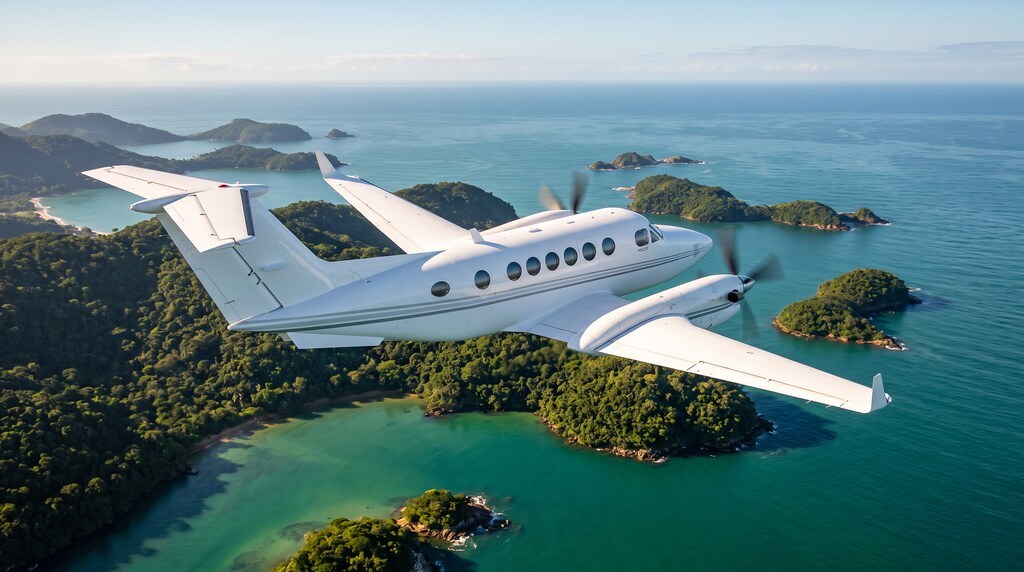
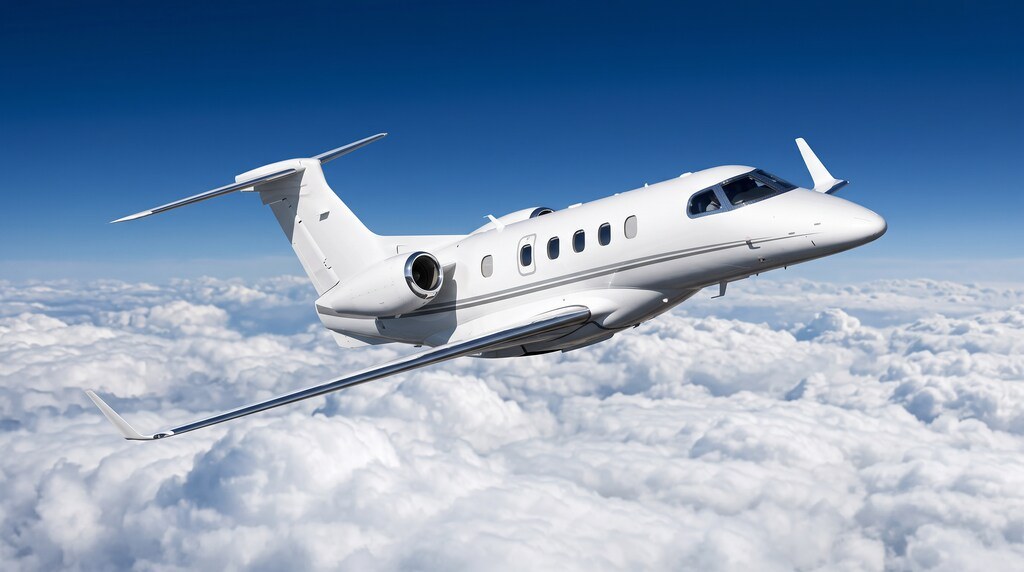
Short answer: a turboprop is the better choice for short and medium legs, short runways and a lower hourly cost. A jet pays off when the trip is longer than about 800 km, when you want to fly above the weather, or when every minute counts. From São Paulo to Rio, for example, a King Air 350 takes about 55 minutes and a Phenom 300E about 40.

What is the difference between a turboprop and a jet?
Both use turbine engines. The difference is how that turbine produces thrust. In a turboprop, the turbine drives a propeller that pulls the aircraft. In a modern business jet (turbofan engine), thrust comes from air pushed by a large internal fan and from the exhaust.
In practice this changes three things: the turboprop is more efficient at lower speeds and altitudes and usually needs less runway; the jet flies higher and faster, and its advantage grows with distance.
Turboprop vs jet in numbers
We compared three models that are common in Brazil: the Cessna Grand Caravan EX (single-engine turboprop), the Beechcraft King Air 350i (twin turboprop) and the Embraer Phenom 300E (light jet).
| Grand Caravan EX | King Air 350i | Phenom 300E | |
|---|---|---|---|
| Type | Single-engine turboprop | Twin turboprop | Twin-engine light jet |
| Cruise speed | 343 km/h (185 kt) | 578 km/h (312 kt) | 859 km/h (464 kt) |
| Maximum range | 1,689 km | 3,345 km | 3,723 km |
| Takeoff distance | 658 m | 1,006 m | 978 m |
| Pressurized cabin | No | Yes | Yes |
| Occupants (manufacturer max.) | up to 14 | up to 11 | up to 11 |
One detail that matters: the Grand Caravan is not pressurized, so it flies lower. The Phenom 300E can reach 45,000 ft (about 13,700 m), above most rain clouds.
How long does each take? Real routes from São Paulo
| Route (from Congonhas) | Distance | Grand Caravan EX | King Air 350i | Phenom 300E |
|---|---|---|---|---|
| Rio de Janeiro (Santos Dumont) | 366 km | 1h20 | 55 min | 40 min |
| Angra dos Reis | 251 km | 1h | 40 min | not recommended* |
| Florianópolis | 488 km | 1h40 | 1h05 | 50 min |
| Brasília | 873 km | 2h50 | 1h45 | 1h15 |
| Porto Seguro | 1,124 km | 3h30 | 2h10 | 1h35 |
Notice the pattern: up to about 500 km, a good twin turboprop is only 15 to 25 minutes slower than a light jet. To Brasília the gap reaches 30 minutes, and to Porto Seguro it passes 35. That is where the jet starts to pay off in time.
Turboprop or jet: how much does it cost?
Turboprops generally have a lower hourly rate. As a reference, Flapper’s São Paulo air charter page showed São Paulo–Rio in November 2026 from about R$ 34,000 by turboprop and between R$ 40,000 and R$ 55,000 by light jet, per leg.
The final price depends on the date, the available aircraft, repositioning (when the aircraft has to fly empty to your origin), crew overnights and airport fees. It is worth quoting the same trip in both categories and comparing.
When to choose a turboprop
- Legs up to about 500 km, where a jet saves little time
- Short-runway destinations such as Angra dos Reis (913 m)
- Larger groups on a budget: the Grand Caravan seats up to 14 occupants in the manufacturer’s maximum configuration
- Regional trips with several stops on the same day
When to choose a jet
- Legs over about 800 km, such as São Paulo–Brasília or São Paulo–Northeast Brazil
- Tight schedules, with a meeting at the destination and a same-day return
- Flying above the weather: jets cruise much higher
- International trips within South America, where the jet’s range avoids fuel stops
Are turboprops safe?
Yes. Turboprops and jets follow the same certification rules, and the operator matters most for safety. In Brazil, commercial charter flights must be operated by an air taxi company certified by ANAC, the national civil aviation agency. Check that certification before booking.
Frequently asked questions
Is a turboprop slower than a jet?
Yes. A twin turboprop like the King Air 350i cruises at about 578 km/h, and a light jet like the Phenom 300E at about 859 km/h. On short legs the difference in total time is small because climb and descent take up much of the flight.
What is the difference between a turboprop and a turbofan?
Both are turbine engines. In a turboprop, the turbine drives an external propeller. In a turbofan, used on business jets, it drives a fan inside the engine nacelle. The turbofan is more efficient at high speed and high altitude.
Can a turboprop land on a short runway?
That is one of its strengths. The Grand Caravan EX takes off in 658 m according to the manufacturer, which opens destinations where most jets do not operate.
How many passengers fit in a turboprop?
It depends on the model and configuration. The King Air 350i carries up to 11 occupants and the Grand Caravan EX up to 14, including crew, in the manufacturers’ maximum configurations. Executive layouts usually have fewer, more comfortable seats.
Is a jet worth the extra cost between São Paulo and Rio?
Usually not for speed: it saves about 15 minutes compared with a King Air 350. A jet can still make sense for comfort or availability on your date. Quote both and compare.
Sources: Textron Aviation: Grand Caravan EX; Aviation Week: King Air 350; Aviation Week: Phenom 300E; Angra dos Reis Airport; Active partner fleet on the Flapper platform (November 2026 survey).