


Switch to:
 EN
EN
The Formula 1 Miami Grand Prix doesn’t just take place on the Hard Rock Stadium asphalt. The real race begins days before, thousands of feet above sea level. This event generates one of the largest annual peaks in air traffic in South Florida. For those flying in for the race, the challenge isn’t just reaching the city—it is navigating the surge in ground and air infrastructure demand.
In this high-stakes scenario, your choice of aircraft, arrival airport, and Fixed Base Operator (FBO) will dictate whether your weekend starts with absolute comfort or frustrating delays.
Event Details
- Dates: May 1st to 3rd, 2026.
- Location: Miami International Autodrome, Hard Rock Stadium, Miami Gardens, FL.
- The Vibe: Beyond the main race on May 3rd, the weekend features over 20 musical performances and global VIP art installations, intensifying the need for high-capacity executive services.
Strategic Airports: Choosing Your Gateway
| Strategic Airport | Distance to Stadium | Recommended Fleet | Operational Constraints & FBO Data |
| Miami-Opa Locka (OPF) | 6.2 miles (17 min)* | Midsize to Ultra-Long Range | The BizAv Epicenter. Reaches max ramp capacity rapidly. Strict PPR and slots are mandatory. Features the highest Special Event Fees in the region. |
| North Perry (HWO) | ~7 miles (15 min*) | Light Jets, Turboprops & Helis | Closest Proximity. The perfect “escape route” (Plan B) to avoid OPF gridlock. Highly recommended as a base for rapid helicopter transfers. |
| Miami Int’l (MIA) | ~14 miles (25-30 min*) | Ultra-Long Range & Heavy Jets | Intercontinental Hub. World-class General Aviation terminals, but shares airspace with heavy commercial traffic. Ideal for direct flights from Europe or the Middle East. |
| Fort Lauderdale Exec (FXE) | ~22 miles (35-40 min*) | All Aircraft Categories | Premium Alternate. Top-tier FBO lounges and a calmer operational environment. Ideal when OPF slots are sold out. |
| Ft. Lauderdale-Hollywood (FLL) | ~15 miles (20-25 min*) | Midsize & Heavy Jets | Mixed Traffic. Excellent infrastructure, but executive operations may face delays due to commercial airline traffic sequencing. |
| Boca Raton (BCT) / Pompano (PMP) | ~25 to 34 miles (35-45 min*) | Light Jets & Turboprops | Relief Airports. Ideal for smaller regional flights looking to bypass heavy jet congestion near Miami Gardens. |
Your Entry Point to the 2026 Miami Grand Prix
Miami-Opa Locka Executive Airport (OPF)
As the primary hub for executive aviation during F1 week, Opa-Locka is where logistical precision meets the highest concentration of private jets in the region. The airport is equipped to handle the world’s most advanced aircraft, including the Gulfstream G700 and Bombardier Global 7500. With 24/7 Customs and Border Protection (CBP) onsite, international arrivals are processed with maximum efficiency. Renowned FBOs such as Signature Aviation and Sheltair provide robust infrastructure, ensuring a high-capacity environment for a seamless transition from your jet to a waiting helicopter.
Boca Raton Airport (BCT)
For travelers seeking a more discreet alternative north of the Miami congestion, Boca Raton offers a professional and streamlined experience. While it maintains a quieter profile than the major hubs, it is important to note that U.S. Customs services are available upon prior coordination, making it a viable entry point for international flights with a planned itinerary. The luxury of BCT lies in its operational agility and its role as a sophisticated launchpad for a short helicopter flight directly to the Hard Rock Stadium, avoiding the heavy traffic of the I-95.
Fort Lauderdale Executive Airport (FXE)
Defined by its superior maintenance support and operational reliability, FXE is a cornerstone of South Florida’s aviation infrastructure. It is a highly trusted hub for family offices and corporate flight departments who demand a “no-surprises” turnaround. With industry-leading FBOs like Banyan Air Service, the airport offers world-class lounges and comprehensive technical support. Its balanced location and efficient ground-to-air transition make it one of the most consistent choices for those who prioritize a professional, well-oiled operation.
North Perry Airport (HWO)
North Perry functions as a tactical “insider” secret due to its extreme proximity to the stadium. As a strictly domestic airport with no onsite customs, it is ideal for passengers arriving from within the U.S. or those who have already cleared entry at another port. While it is primarily geared toward light jets, turboprops, and helicopters, its strategic value is unmatched: by bypassing the heavy jet congestion of larger airports, it offers one of the quickest paths to the Paddock, provided that flight coordination is secured well in advance.
Miami International (MIA) and Fort Lauderdale-Hollywood (FLL)
These intercontinental hubs are the essential choice for large-scale operations involving Heavy Jets, Ultra-Long Range aircraft, and VIP Airliners such as the BBJ or ACJ. Despite the high volume of commercial traffic, private FBOs like Signature and Sheltair isolate the experience from the main terminals, providing 24/7 customs and the heavy-duty ground support required for large-category aircraft. For international groups requiring 24-hour maintenance and specialized logistics, these airports offer the industrial power necessary for complex global itineraries.
Miami Executive Airport (TMB)
Formerly known as Kendall-Tamiami, TMB is the strategic alternative for those staying in South Miami, Coral Gables, or Coconut Grove. It offers a refined environment with significantly less slot pressure than Opa-Locka. While customs services are available, they require prior coordination for international arrivals. The airport features robust runways and modern FBO facilities, making it an excellent choice for travelers who wish to avoid the northern gridlock while maintaining a high level of operational agility.
Pompano Beach Airpark (PMP)
Pompano Beach serves as a highly functional sanctuary, particularly useful as an “overflow parking” destination when Miami’s primary ramps reach capacity. It is a domestic airfield that offers a discreet environment with significantly lower landing and parking fees. For clients staying in exclusive northern enclaves like Hillsboro Beach, PMP provides a quiet and efficient base. When integrated with a pre-coordinated helicopter transfer, it becomes an effective bypass route, allowing passengers to land away from the congestion and fly directly to the circuit.
Aircraft Selection: The Ideal Fleet for Miami
Choosing the right tail for the mission depends on your group size, distance, and desired “apron presence.”
Ultra-Long-Range & Heavy Jets
- Models: Gulfstream G650ER, Bombardier Global 7500, Dassault Falcon 8X.
- Best For: Direct transcontinental flights (e.g., London, Dubai, or Los Angeles).
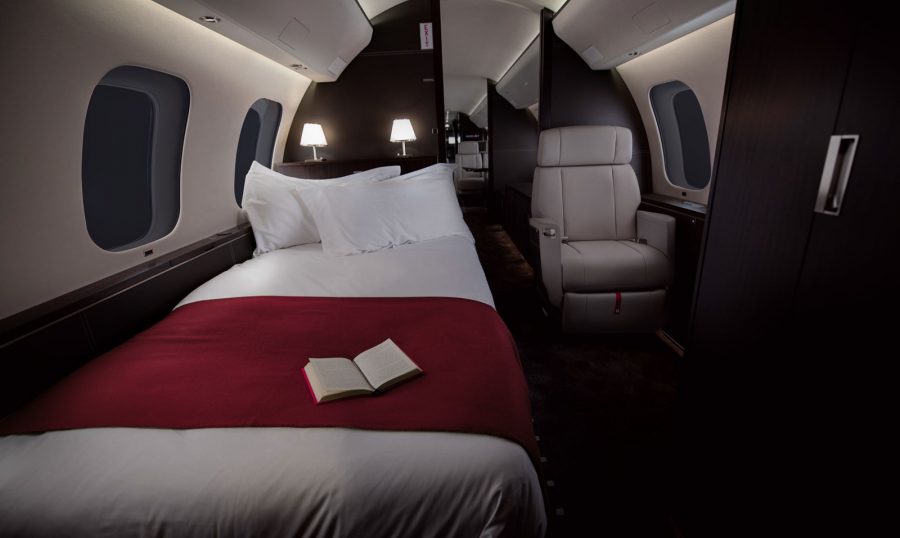
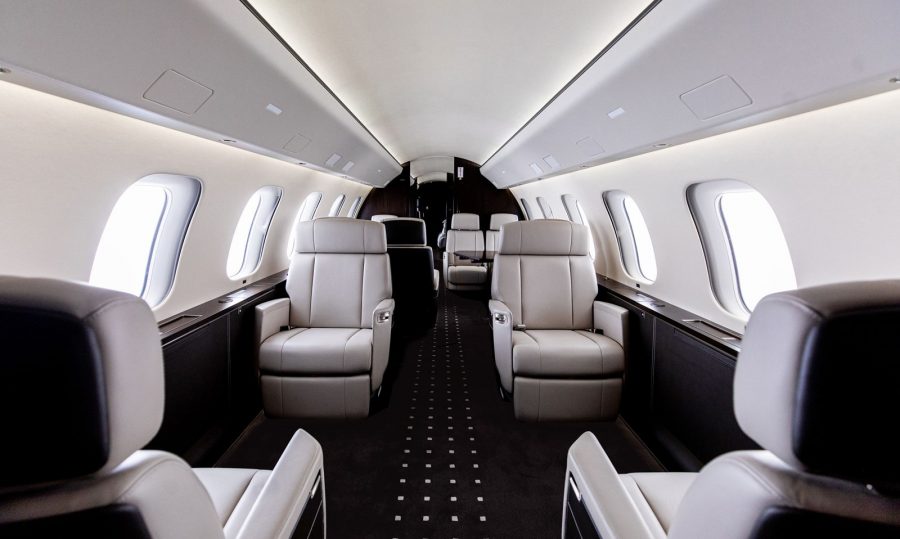
- Amenities: Full-size galleys, showers, and dedicated crew rest areas.
- Logistics: These require robust handling infrastructure and long runways found at MIA or OPF.
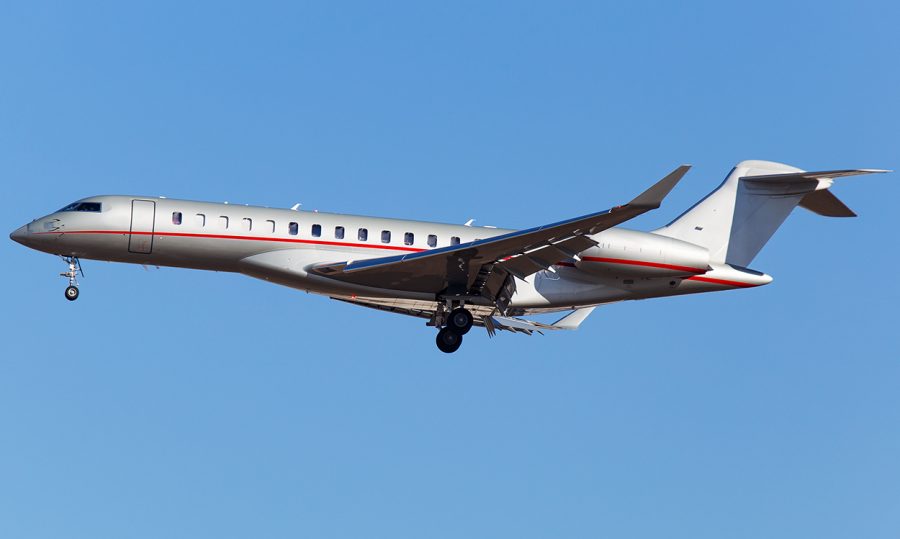
Bombardier Global 7500 

Super-Midsize & Midsize Jets
- Models: Challenger 3500, Citation Latitude, Embraer Praetor 600.
- Best For: Groups of 8–10 passengers traveling from within the U.S., Mexico, or the Caribbean.
- Why choose them: Superior runway performance allows these jets to access smaller, more convenient airports with agility.
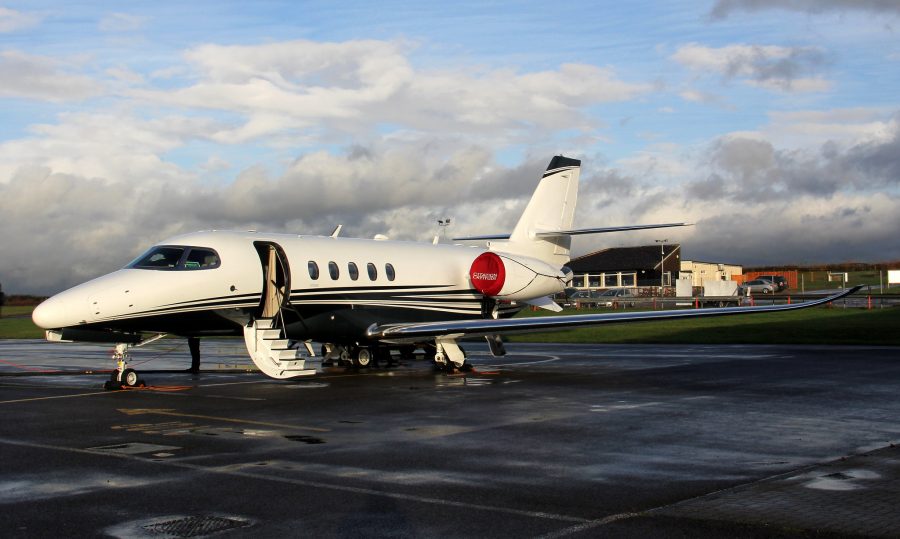
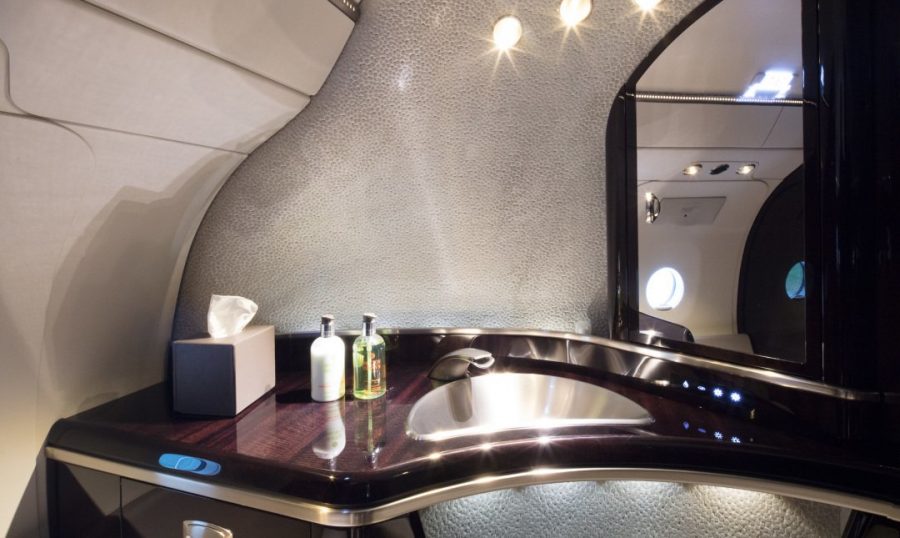
Citation Latitude 


Light Jets & Luxury Turboprops
- Models: Embraer Phenom 300E, Citation CJ4, Pilatus PC-24.
- Best For: Quick regional hops (e.g., Orlando, Nassau, Atlanta).
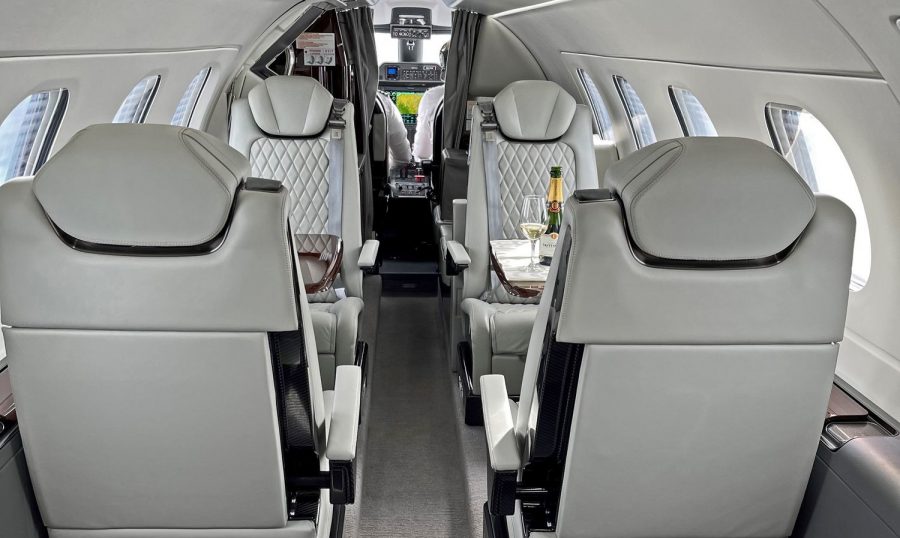
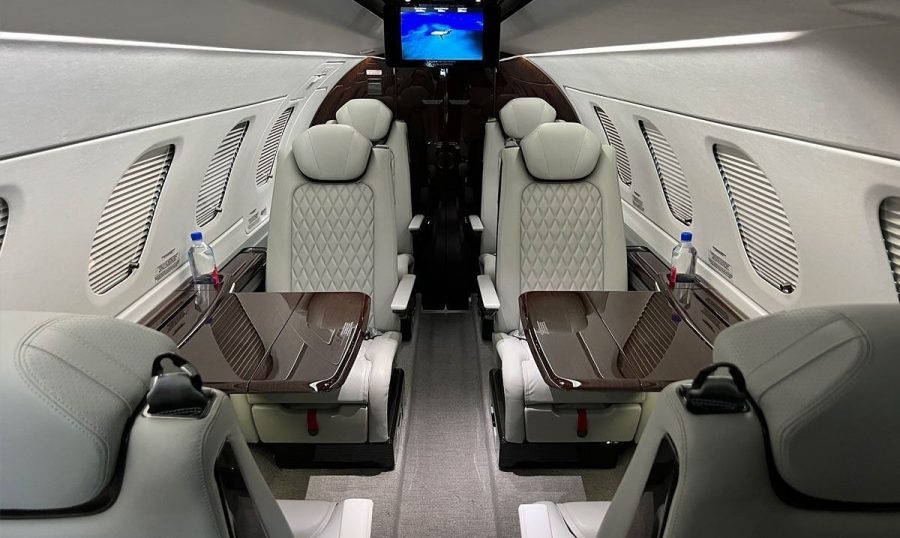
- Why choose them: The Phenom 300 remains a favorite for its speed and BMW-designed interior.
- Logistics: Ideal for using Boca Raton (BCT) or Fort Lauderdale Executive (FXE) to bypass heavy jet traffic.
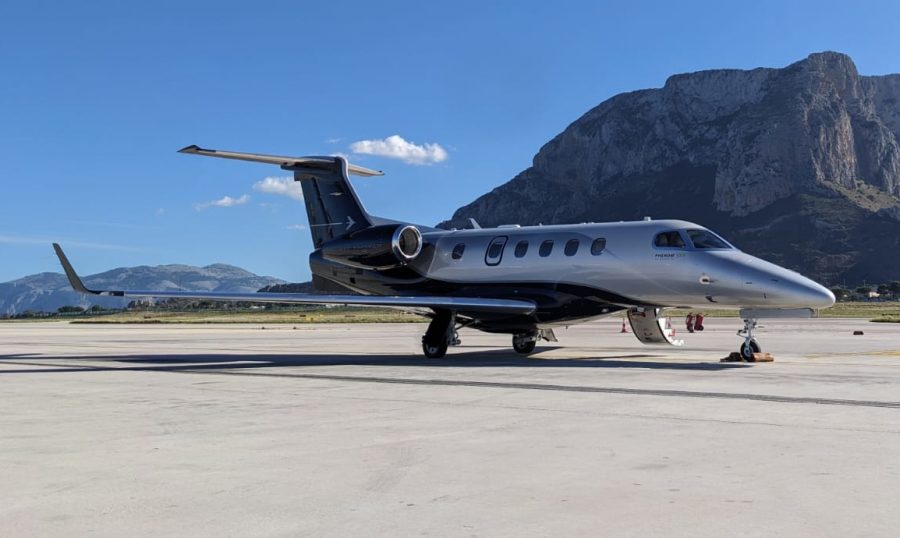
Phenom 300E 

Inside Track: 3 Essential Strategies for 2026 F1 Miami
Planning an operation for the Miami F1 is not just about “getting there”, it’s about how you arrive. Waiting until the last minute doesn’t just mean paying more; it means sacrificing your most valuable asset: time.
1. The 45-Day Rule: Proximity is Power
Don’t be fooled: In Miami during Race Week, distance isn’t measured in miles, it’s measured in Slots. Historically, 85% of the landing spots at the airports closest to the stadium (such as Opa-locka) are fully booked 45 days before the event.
- The Risk: If you miss this window, your jet will be diverted to secondary airports over 30 miles away, forcing an exhausting and unpredictable ground commute.
- The Strategy: Secure your landing slot and ramp space now to ensure you are parked in the stadium’s “backyard.”
2. Operational Shielding: Steer Clear of the “Grey Market”
The explosive surge in demand inevitably attracts unauthorized operators running flights without rigorous FAA certifications (Part 135).
- The Risk: Flying with a non-homologated operator compromises your safety and voids your insurance coverage. Furthermore, authorities ramp up inspections during F1 week, and an intercepted flight can derail your entire weekend.
- The Strategy: Always demand a valid Air Operator Certificate (AOC). Our brokerage works exclusively with audited fleets and elite crews, ensuring your only surprise is the result on the track.
3. The Only Real Escape Route: Integrated Helicopter Transfers
During F1 week, traffic in Miami Gardens shifts from an inconvenience to a total gridlock. A mere 6-mile trip can easily exceed 90 minutes of waiting under the Florida sun.
- The Contrast: While thousands are trapped in the bottleneck access points to the Hard Rock Stadium, our clients complete the journey in under 10 minutes.
- The Strategy: A helicopter transfer is not an optional luxury; it is the logistical tool that allows you to have breakfast in Brickell or Palm Beach and still arrive at the Paddock before the formation lap.